Introduction
In combat sports, hands and shins grab the headlines. We admire the devastating power of a clean knockout punch or the thunderous impact of a perfectly timed roundhouse kick. However, the true masters of martial arts know that the arms and legs are merely delivery systems. The real engine behind every successful offensive and defensive exchange is footwork. Footwork controls distance, dictates angles, creates openings, and keeps you safe from incoming attacks. Without precise movement, even the most powerful strikes are useless. This deep dive explains why footwork is the ultimate foundation of combat mastery and how you can optimize your movement to dominate the ring.
The Biomechanics of Movement: Generating Power from the Ground Up
A common misconception among beginners is that punching power comes solely from the shoulders and arms. In reality, devastating power is generated from the ground up. Kinetic energy starts with your feet pushing off the canvas, travels up through the legs, rotates around the hips, and accelerates through the core before exploding out through your boxing gloves.
If your feet are poorly positioned, too wide, or completely off-balance, that kinetic chain breaks down entirely. Proper footwork ensures that your center of gravity remains perfectly balanced beneath you at all times. This positioning allows you to transition instantly from an elusive defensive movement to an explosive counterattack without any wasted energy or awkward delays.
Tactical Distance Management: The Art of Boxing without Being Hit
Distance management is your primary line of defense. A fighter who masters distance can stay a fraction of an inch outside their opponent’s striking range, causing them to miss wildly and waste energy, before instantly stepping inside the pocket to deliver a sharp counter-strike.
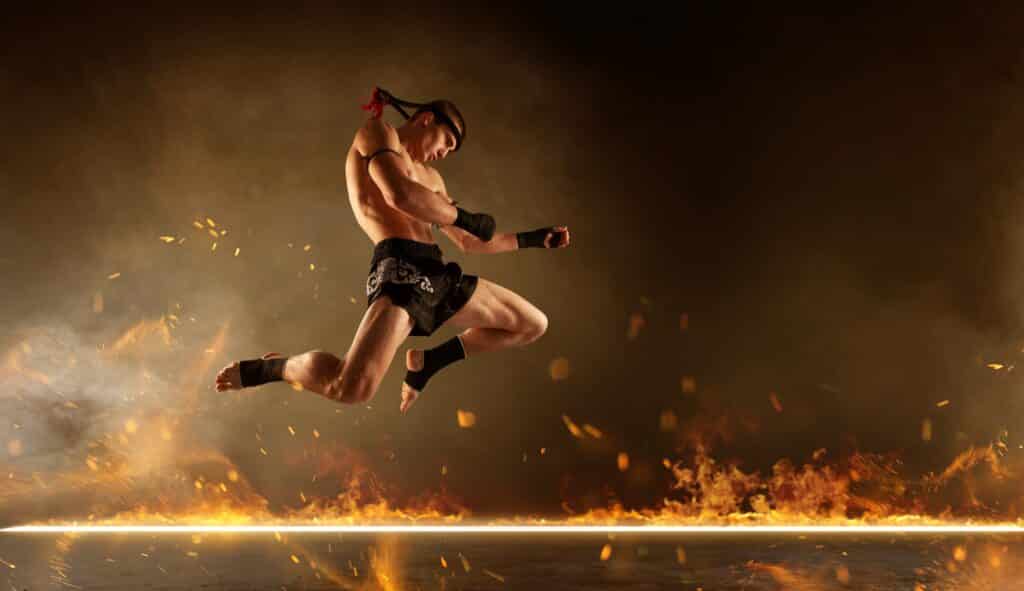
In Muay Thai, distance management is even more dynamic due to the variety of weapons involved. You must constantly manage the long-range teep, mid-range kicks, close-range punches, and inside elbow or clinch positions. Moving smoothly while wearing an authentic, unrestricted Muay Thai short allows your hips to open up easily, letting you glide effortlessly into kicking range and reset safely before your opponent can fire back.
Creating Dominant Angles: The Blind Spot Matrix
Linear fighters move only forward and backward. They are predictable and easy to timing-counter. Elite
fighters, however, understand the power of lateral movement and creating angles. By stepping slightly outside an opponent’s lead foot—known as taking the outside angle—you position yourself outside their immediate line of sight and away from their primary weapons.
From this dominant angle, you can throw combinations with clean visibility while your opponent is forced to turn their entire body to face you, leaving them highly vulnerable. Creating these angles requires quick, agile footwork that shouldn’t be slowed down by heavy, bulky safety gear. Utilizing a streamlined, anatomically fitted Muay Thai shinguard ensures your legs stay fully protected during aggressive lateral movements without adding unnecessary weight to your steps.
“Float like a butterfly, sting like a bee. The hands can’t hit what the eyes can’t see.” — Muhammad Ali
Practical Drills to Elevate Your Footwork
Improving your footwork requires dedicated, focused practice. Integrate these essential drills into your weekly training schedule to build sharpness and agility:
1. The Agility Ladder: Excellent for developing fast feet, precise coordination, and fine-tuning muscle
memory for complex lateral movements.
2. Shadowboxing with Cones: Set up a grid of cones and focus entirely on cutting clean angles, pivoting around the corners, and maintaining a balanced stance as you simulate offensive and defensive combinations.
3. The Mirror Drill: Partner up with a teammate and mirror their movements precisely. If they step forward, you step back; if they circle left, you circle right. This is highly effective for mastering real-time distance management.
How Premium Gear Complements Your Ring Movement
Your choice of equipment directly affects your agility and movement speed. Heavy, low-tier gear causes early fatigue and slows down your footwork, making you an easy target. Tocayah designs equipment with a strong focus on high-level performance and lightweight protection.
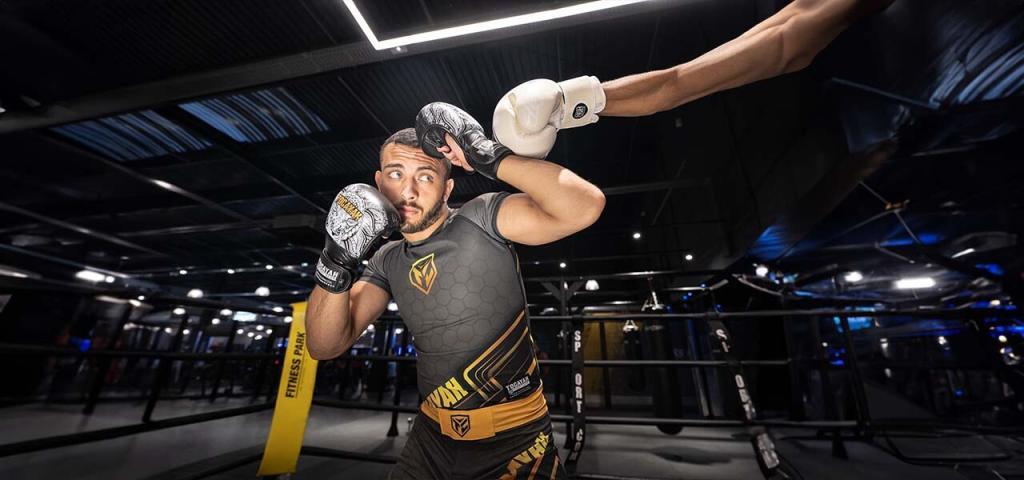
Their professional boxing gloves provide exceptional wrist stability and hand protection while maintaining a compact, streamlined profile that keeps your upper body balanced. Additionally, Tocayah’s premium fight shorts and protective gear are constructed from lightweight materials that offer excellent mobility, ensuring your movement remains fast, fluid, and completely uninhibited throughout the fight.
Conclusion
Footwork is the ultimate foundation of successful fighting. It turns defense into offense, transforms average power into devastating knockouts, and separates great fighters from the rest. Stop focusing solely on how hard you can hit. Dedicate time to mastering your stance, movement, and angles. Equip yourself with premium gear from Tocayah, and take full control of the ring.
FREQUENTLY ASKED QUESTIONS
1. How wide should my fighting stance be for optimal balance?
Generally, your feet should be slightly wider than shoulder-width apart. A stance that is too wide offers
stability but slows down your movement; a stance that is too narrow provides excellent speed but
leaves you vulnerable to being off-balanced.
Why do my calves tire out quickly during sparring?
This is common for beginners who stay constantly on their tiptoes. Focus on maintaining a relaxed, flat-
footed stance when out of range, springing onto the balls of your feet only when entering striking
distance or dodging attacks.
Does heavy gear slow down lateral movement?
Yes, heavy or poorly fitting gear adds unnecessary weight and restricts natural joint movement.
Investing in lightweight, professional-grade Tocayah equipment ensures maximum speed, protection,
and mobility.